Figures of Speech

Language can be used in two ways – literally and figuratively. Literal language is direct and uses the real definition and meanings of words and phrases. But when we talk figuratively, the meaning of any word/phrase will depend on the context in which they are used. A figure of speech relies on such figurative language and rhetoric.
When using figures of speech the words will diverge from their literal meanings, to give a more stylized and specialized meaning to these words. Let us take for example the phrase”fast like lightning”. This phrase merely implies great speed, it does not mean literally as fast as lightning. Example: “On hearing the school bell the kids ran out of the class as fast as lightning”.
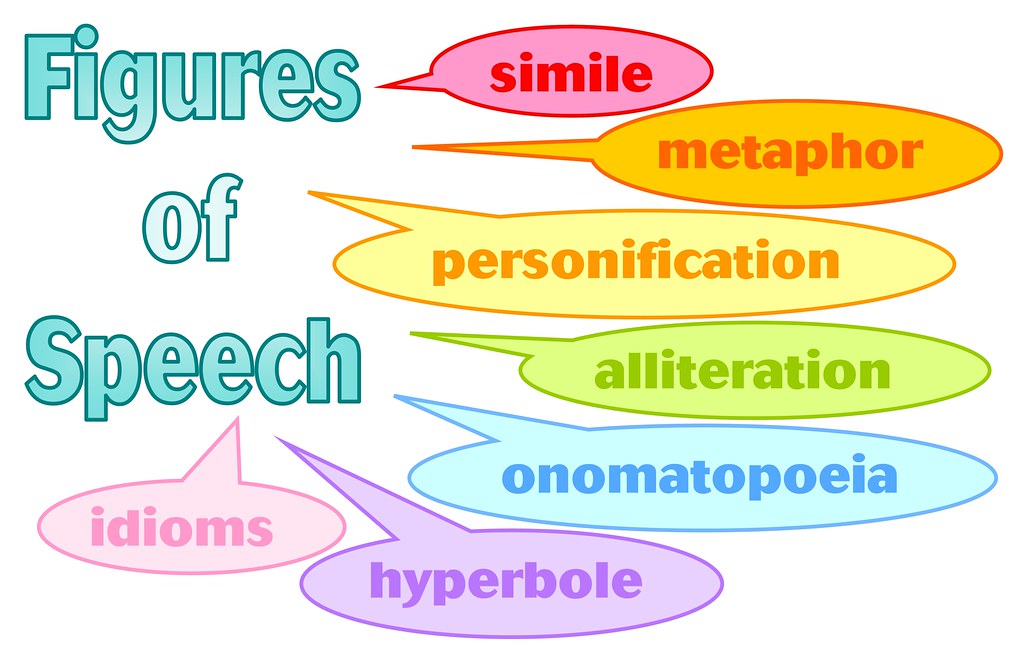
FIGURES OF SPEECH: TROPES AND SCHEMES
I. TROPES
A trope is a figure of speech that uses words or phrases in a way in which the intended meaning extends beyond the literal meaning of the words used. Some of the most commonly used tropes include metaphor, simile, and personification. But, there are many others. We will take a look at some of the main ones below.
HYPERBOLE:

Definition: This figure of speech uses exaggeration for emphasis or other specific effects such as humour, for example. As with other figures of speech, it is not meant to be taken literally by the audience or the reader - they are usually in on it. We often use hyperbole in our daily speech.
Example: I could have died of embarrassment
A trope is a figure of speech that uses words or phrases in a way in which the intended meaning extends beyond the literal meaning of the words used. Some of the most commonly used tropes include metaphor, simile, and personification. But, there are many others. We will take a look at some of the main ones below.
HYPERBOLE:

Definition: This figure of speech uses exaggeration for emphasis or other specific effects such as humour, for example. As with other figures of speech, it is not meant to be taken literally by the audience or the reader - they are usually in on it. We often use hyperbole in our daily speech.
Example: I could have died of embarrassment
IDIOM:

Definition: An idiom is a figurative use of language that cannot be understood from a literal understanding of the words alone. Idioms are a part of the language and each language develops its own unique idioms over time. Idioms are similar to other figures of speech except that while most other figures of speech can be the original conceptions of the writer, idioms are already in existence within the language. Many of Shakespeare’s figures of speech have become crystallized in the language as the idioms of today.
Example: ‘Kick the bucket / Gave up the ghost / Passed away’
METAPHOR:

Definition: A metaphor makes a comparison between two unrelated things by stating one thing is the other thing. This is usually done by highlighting or suggesting a shared quality or characteristic between the two distinct elements.
Example: Life is a rollercoaster
OXYMORON:

Definition: Oxymorons combine two opposing elements into a single phrase or sentence. They can be used to create a range of effects, comedic, dramatic, or thought-provoking.
Example: “Parting is such sweet sorrow.”
PERSONIFICATION:

Definition: Personification is a special type of metaphor where human actions or feelings are ascribed to a non-human thing. When we talk about something that isn’t human as if it was, then we are personifying it - that is, making it into a person. This figurative use of language is most commonly associated with poetry and literary fiction, but we can often find it in our daily speech too.
Example: An angry sky / Books were her constant companions / That car’s a beauty
SIMILE:

Definition: Similes make comparisons between two seemingly unrelated elements by using ‘like’ or ‘as’ to highlight a common quality or characteristic both things share. Similes make a comparison by suggesting a similarity between two things, rather than making a comparison by stating that one thing is something else - such as we find with metaphors.
Example: Her eyes shone like diamonds / He was as strong as a horse
SYNECDOCHE:

Definition: This figure of speech most often occurs when a part of a thing is used to represent the whole of a thing. However, it can also occur when the whole of a thing is used to stand for a part of a thing. The first type is called microcosm and the second, macrocosm. This trope is better conveyed through illustration than explanation.
Example: All hands on deck! (microcosm) / The United States declared war. (macrocosm)
II. SCHEMES
Schemes are a figurative use of language that deviates from the usual mechanics of a sentence. This may be in terms of syntax, sound, or word order. Writers can use schemes to create rhythm, musicality, or to draw comparisons or contrasts within a text. They are particularly associated with poetry, as they often work on a rhythmic basis or through sound. Unlike tropes, schemes operate on a sense level more than an intellectual level.
ALLITERATION:

Definition: The repetition of the initial consonant sound of consecutive or near consecutive words for effect. Alliteration is also referred to as head rhyme or initial rhyme.
Example: The slithering snake slid sideways silently
ASSONANCE:

Definition: The repetition of vowel sounds within a group of words. As with alliteration, it is the repeating sounds that are important, not the letters.
Example: “Fleet feet sweep by sleeping geese” by Pink Floyd
CONSONANCE:

Definition: The repetition of consonant sounds anywhere in the words that are near each other. This should be distinguished from alliteration, where the repetition is limited to the sounds at the beginnings of words. Alliteration is a special type of consonance, so all alliteration is a form of consonance, but not all consonance is alliteration.
Example: “I’m sure she sells sea-shore shells”
ONOMATOPOEIA:

Definition: Onomatopoeia refers to words which sound like the thing they describe. Onomatopoeia is most commonly seen in poetry where its use serves as a powerful tool for the imagination as it imitates the sounds of the things described themselves. A common example of onomatopoeia can be seen in the names for the sounds various animals make.
Example: Woof! Baa! Moo! Oink! Cock-a-doodle-do!
PARALLELISM:

Komentar
Posting Komentar